
Δεξιότητες και Ικανότητες

ΝΈΕΣ ΠΡΟΟΠΤΙΚΈΣ

2 ώρες

-
Ένα μεγάλο κομμάτι χαρτί, αναδιπλούμενο πίνακα χαρτιού ή ασπροπίνακας
-
Μαρκαδόροι και στυλό σε διαφορετικά χρώματα
-
Αυτοκόλλητα χαρτάκια
-
Προαιρετικά: αυτοκόλλητη ταινία για να κολλήσουμε το χαρτί μας στον τοίχο
Ποιο είναι το εργαλείο και ποιος είναι ο σκοπός και το πλεονέκτημα του;
Η προσέγγιση «Νέες προοπτικές» βοηθά να επανεξετάσετε τις υπάρχουσες παραδοχές σας σχετικά με τις δεξιότητες, τις γνώσεις και τις δυνατότητές σας. Προσφέρει νέες οπτικές γωνίες, καθώς σας καλεί να δείτε τις δεξιότητες και τις γνώσεις σας μέσα από διαφορετικούς ρόλους, πλαίσια ή περιορισμούς.Με αυτόν τον τρόπο, το εργαλείο βοηθά να ανακαλύψετε ικανότητες και δυνατά σημεία που διαφορετικά μπορεί να περνούσαν απαρατήρητα, να υποτιμούνταν ή να θεωρούνταν δεδομένα.
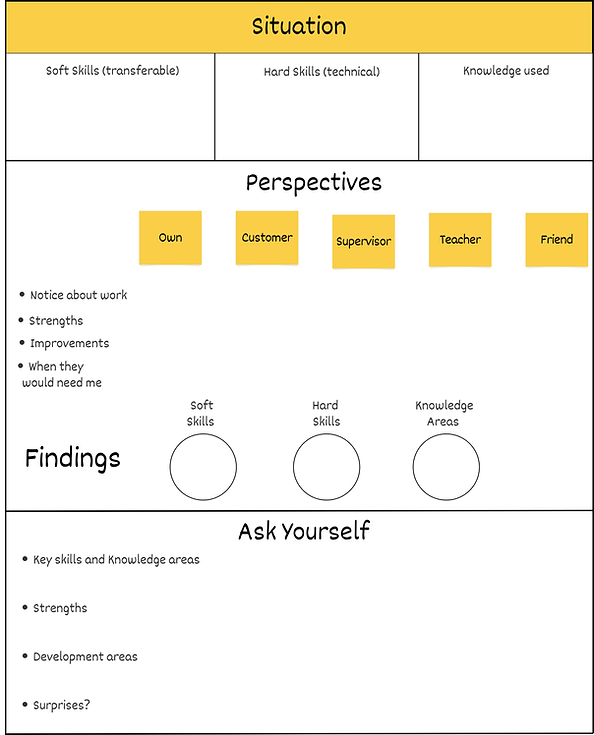
Βήματα για τη χρήση αυτού του εργαλείου
Βήμα 1
Επιλέξτε μια κατάσταση από την επαγγελματική ή την προσωπική σας ζωή στην οποία χρησιμοποιήσατε τις δεξιότητες και τις γνώσεις σας. Γράψτε αυτή την κατάσταση στην κορυφή ενός φύλλου χαρτιού ή ενός πίνακα. Στη συνέχεια, καταγράψτε τις διαπροσωπικές/μεταβιβάσιμες δεξιότητες, τις τεχνικές δεξιότητες και τις γνώσεις που χρησιμοποιήσατε σε αυτή την κατάσταση και εξηγήστε σύντομα πώς τις αξιοποιήσατε.
Βήμα 2
Επιλέξτε τέσσερις εναλλακτικές οπτικές γωνίες. Πρόκειται για διαφορετικούς ρόλους ή πρόσωπα, καθένα από τα οποία βλέπει την κατάσταση από τη δική του σκοπιά. Ενδεικτικές επιλογές είναι:
-
ένας πελάτης,
-
ένας συνάδελφος που σας θαυμάζει,
-
ένας συνάδελφος που σας προκαλεί,
-
ο/η προϊστάμενός/ή σας,
-
ένας/μία δάσκαλος/α ή εκπαιδευτής/τρια από το παρελθόν σας,
-
κάποιος που δεν σας γνωρίζει,
-
κάποιος που σας γνωρίζει καλά, όπως ένας φίλος ή ένα μέλος της οικογένειάς σας,
-
ένα παιδί,
-
ο μελλοντικός εαυτός σας, πέντε χρόνια μετά.
Βήμα 3
Γράψτε τους ρόλους ή τα πρόσωπα που επιλέξατε σε σειρά κάτω από τον τίτλο της κατάστασης. Μπορείτε να τους κυκλώσετε, να τους υπογραμμίσετε ή να τους γράψετε σε αυτοκόλλητα χαρτάκια και να τα τοποθετήσετε στο χαρτί ή στον πίνακα.
Βήμα 4
Θέστε ερωτήσεις αλλαγής προοπτικής και απαντήστε για κάθε ρόλο ή πρόσωπο. Γράψτε κάθε απάντηση ως σύντομη πρόταση κάτω από τον αντίστοιχο ρόλο.
-
Τι θα παρατηρούσε αυτό το άτομο σχετικά με τον τρόπο που εργάζεστε ή λειτουργείτε στη συγκεκριμένη κατάσταση;
-
Σε τι θα θεωρούσε ότι είστε καλοί/ές; Ποια δυνατά σημεία, δεξιότητες ή γνώσεις θα αναγνώριζε σε εσάς;
-
Ποιες δεξιότητες, γνώσεις ή άλλους τομείς θα θεωρούσε ότι χρειάζεται να βελτιώσετε;
-
Σε ποιες καταστάσεις θα απευθυνόταν σε εσάς για βοήθεια ή συνεργασία;
Βήμα 5
Προσδιορίστε τις δεξιότητες και τις γνώσεις σας με βάση τις απαντήσεις που προέκυψαν. Ομαδοποιήστε παρόμοιες δεξιότητες και δημιουργήστε μια λίστα με τα ευρήματά σας για κάθε έναν από τους ακόλουθους τομείς: διαπροσωπικές/μεταβιβάσιμες δεξιότητες, τεχνικές δεξιότητες, γνώσεις.
Βήμα 6
Εξετάστε τα ευρήματά σας και αναρωτηθείτε: Ποιες είναι οι βασικές μου δεξιότητες και οι κύριοι τομείς γνώσης μου; Ποια είναι τα δυνατά μου σημεία; Ποιους τομείς χρειάζεται να αναπτύξω; Υπάρχει κάτι στα αποτελέσματα που με εκπλήσσει;

Συμβουλές και μυστικά για την χρήση του
εργαλείου
-
Αντί να χρησιμοποιήσετε μόνο φανταστικούς ρόλους ή πρόσωπα, μπορείτε να ζητήσετε ανατροφοδότηση από πραγματικούς ανθρώπους και να αξιοποιήσετε τα σχόλια που θα λάβετε.
Άλλα εργαλεία αυτής της φάσης

Αναγνώριση και οπτικοποίηση των δεξιοτήτων και των ικανοτήτων

Το εργαλείο βοηθά στη δημιουργία συνδέσεων ανάμεσα σε προηγούμενες εμπειρίες και πιθανές επαγγελματικές ευκαιρίες.

Αναγνώριση δεξιοτήτων σε μεταβαλλόμενες καταστάσεις

Αναγνωρίζουμε δεξιότητες, γνώσεις και εμπειρίες μέσα από καλές πρακτικές, παραδείγματα και διαθέσιμο υλικό.

Αναγνωρίστε δεξιότητες και ικανότητες σε οποιαδήποτε κατάσταση

Το εργαλείο βοηθά στην αναγνώριση και ομαδοποίηση δεξιοτήτων μέσα από την παρατήρηση της καθημερινής ζωής και των καθημερινών δραστηριοτήτων.

Μια οπτική αποτύπωση των δεξιοτήτων, των γνώσεων και των εμπειριών σας, καθώς και της σημασίας τους για εσάς.

Μια οπτική αποτύπωση των δεξιοτήτων, των χαρακτηριστικών, του επιπέδου εμπειρίας και των δυνατοτήτων σας.