
Αναγνώριση της επαγγελματικής ευκαιρίας

ΚΑΜΒΆΣ ΠΡΌΤΑΣΗΣ ΑΞΊΑΣ ΕΡΓΑΖΟΜΈΝΩΝ

60 λεπτά

-
Ένα μεγάλο φύλλο χαρτιού, ελάχιστου μεγέθους Α3, ή ο καμβάς της Πρότασης Αξίας για τον Εργαζόμενο.
-
Μαρκαδόροι και στυλό σε διάφορα χρώματα.
-
Αυτοκόλλητα χαρτάκια σε διάφορα χρώματα.
Ποιο είναι το εργαλείο και ποιος είναι ο σκοπός και το πλεονέκτημα του;
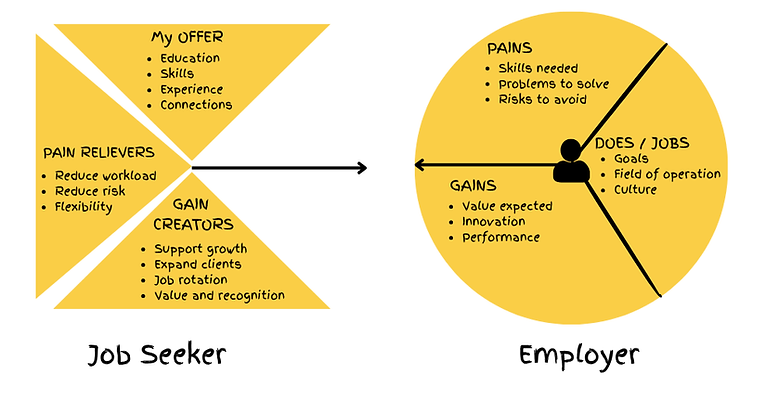
Ο καμβάς πρότασης αξίας εργαζομένου βοηθά τα άτομα να αναλογιστούν την αξία που μπορούν να προσφέρουν σε έναν εργοδότη, εντοπίζοντας ευκαιρίες σταδιοδρομίας που ευθυγραμμίζονται με τις δεξιότητες, τις ικανότητες και τα ενδιαφέροντά τους. Υποστηρίζει τα άτομα στο να κατανοήσουν τις ανάγκες των εργοδοτών, να αναγνωρίσουν πώς τα δυνατά τους σημεία, οι δεξιότητες, οι γνώσεις και οι ικανότητές τους μπορούν να καλύψουν αυτές τις ανάγκες, καθώς και να αποσαφηνίσουν τι τους καθιστά πολύτιμους εργαζομένους. Μέσω της χαρτογράφησης αυτών των στοιχείων, ο καμβάς συμβάλλει στη διαμόρφωση μιας συνολικής εικόνας για τις επαγγελματικές δυνατότητες του ατόμου, διευκολύνοντας τον εντοπισμό των δεξιοτήτων ή των τομέων γνώσης που ενδέχεται να χρήζουν περαιτέρω ανάπτυξης.
Ο καμβάς πρότασης αξίας εργαζομένου βοηθά τα άτομα να προετοιμαστούν για αιτήσεις εργασίας και συνεντεύξεις, επιτρέποντάς τους να επικοινωνήσουν αποτελεσματικότερα τα δυνατά τους σημεία και να αναδείξουν την πιθανή συνεισφορά τους στον εργοδότη. Αποτελεί μια προσαρμογή του καμβά πρότασης αξίας.
Κάντε κλικ για να κατεβάσετε το πρότυπο ‘Καμβάς Πρότασης Αξίας προς τον Εργαζόμενο
Βήματα για τη χρήση αυτού του εργαλείου
Βήμα 1
Κατεβάστε ή εκτυπώστε τον καμβά της «Πρότασης Αξίας για τον Εργαζόμενο» (Employee Value Proposition Canvas) και γράψτε το όνομά σας στο επάνω μέρος.
Βήμα 2
Ξεκινήστε εστιάζοντας στο προφίλ του εργοδότη, στη δεξιά πλευρά του καμβά. Γράψτε το όνομα του εργοδότη ή του κλάδου στο επάνω μέρος. Συμπληρώστε τα τρία πεδία: «δραστηριότητες/ρόλοι» (does/jobs), «προκλήσεις/δυσκολίες» (pains) και «οφέλη/προσδοκίες» (gains). Αυτές οι πληροφορίες σάς βοηθούν να εντοπίσετε πώς τα δυνατά σας σημεία, οι δεξιότητες και οι ικανότητές σας μπορούν να δημιουργήσουν προστιθέμενη αξία για τον εργοδότη ή τον κλάδο. Κάντε έρευνα για τον εργοδότη ή τον κλάδο ώστε να συμπληρώσετε τον καμβά. Μπορείτε είτε να γράψετε απευθείας πάνω στον καμβά είτε να καταγράψετε τις σκέψεις σας σε αυτοκόλλητα σημειώματα και να τα κολλήσετε σε αυτόν.
-
Δραστηριότητες/Ρόλοι : Ποιοι είναι οι γενικοί στόχοι του οργανισμού; Σε ποιον τομέα δραστηριοποιείται; Ποια είναι η κουλτούρα του;
-
Προκλήσεις/Δυσκολίες : Τι πρέπει να διεκπεραιωθεί για τον εργοδότη; Ποια είναι η φύση της εργασίας; Ποια προβλήματα πρέπει να επιλυθούν και ποιες εργασίες περιλαμβάνονται; Ποιες δεξιότητες και ικανότητες απαιτούνται στον οργανισμό; Ποιους κινδύνους που σχετίζονται με την εργασία και το προσωπικό επιθυμούν να αποφύγουν;
-
Οφέλη/Προσδοκίες : Ποια αξία επιδιώκουν να λάβουν από εσάς; Τι σημαίνει επιτυχία για αυτούς; Σημαίνει, για παράδειγμα, καινοτομία, νέες ιδέες και προοπτικές, βελτιωμένη απόδοση ή παραγωγικότητα, αξιοπιστία, διασυνδέσεις, εμπειρία ή κάτι άλλο;
Βήμα 3
Στη συνέχεια, συμπληρώστε την πλευρά του υποψήφιου εργαζόμενου, στην αριστερή πλευρά του καμβά.
-
Η προσφορά σας: «προϊόντα και υπηρεσίες» που μπορούν να ωφελήσουν τον εργοδότη, όπως οι δεξιότητες, η εμπειρία, τα επιτεύγματα, οι διασυνδέσεις και το στυλ εργασίας σας.
-
Λύσεις για τις προκλήσεις (Pain relievers): Πώς μπορείτε να μειώσετε τις δυσκολίες και τα προβλήματα που αντιμετωπίζει ο εργοδότης; Αυτό μπορεί να περιλαμβάνει τη μείωση του φόρτου εργασίας, τη βελτίωση της σαφήνειας και της δομής, την αύξηση της αποδοτικότητας, την επίλυση προβλημάτων ή τη μείωση κινδύνων.
-
Δημιουργοί οφέλους (Gain creators): Πώς μπορείτε να αξιοποιήσετε τις ικανότητες και την εργασία σας για να δημιουργήσετε θετικά αποτελέσματα; Παραδείγματα περιλαμβάνουν τη συμβολή στην ανάπτυξη του οργανισμού, την αύξηση των πωλήσεων και της χρηματοδότησης, τη διεύρυνση του πελατολογίου και τον διεθνή προσανατολισμό του.
Βήμα 4
Συγκρίνετε τις δύο πλευρές στους εξής τομείς:
-
Τις «Δραστηριότητες/Ρόλους» του εργοδότη με τη δική σας «Προσφορά».
-
Τις «Προκλήσεις/Δυσκολίες» του εργοδότη με τις δικές σας «Λύσεις».
-
Τα «Οφέλη/Προσδοκίες» του εργοδότη με τους δικούς σας «Δημιουργούς οφέλους».
Βήμα 5
Για κάθε τομέα, καταγράψτε Θα μπορούσατε να προσφέρετε κάτι επιπλέον ή χρειάζεται να αναπτύξετε περαιτέρω τις δεξιότητές σας;
Βήμα 6
Στη συνέχεια, αναλύστε πώς οι δεξιότητες και η εμπειρία σας θα μπορούσαν να ωφελήσουν τον εργοδότη. Θα μπορούσατε να προσφέρετε κάτι επιπλέον ή χρειάζεται να αναπτύξετε περαιτέρω τις δεξιότητές σας;
Βήμα 7
Συντάξτε ένα σύντομο πλάνο προσέγγισης του εργοδότη, με βάση τον στόχο σας. Για παράδειγμα, θα μπορούσατε να ετοιμάσετε ένα βιογραφικό σημείωμα ή μια αίτηση εργασίας. Σκεφτείτε επίσης πώς θα μπορούσατε να ξεχωρίσετε από τους υπόλοιπους υποψηφίους.
Βήμα 8
Μπορείτε επίσης να καταρτίσετε ένα πλάνο δράσης που θα σας βοηθήσει να αναπτύξετε τους τομείς που επιθυμείτε να βελτιώσετε.

Συμβουλές και μυστικά για την χρήση του εργαλείου
Άλλα εργαλεία αυτής της φάσης

Ανάπτυξη και οργάνωση ιδεών για ευκαιρίες επαγγελματικής εξέλιξης

Μια οπτική απεικόνιση κρυφών επαγγελματικών ευκαιριών

Αντικατάσταση, συνδυασμός, προσαρμογή, τροποποίηση, αξιοποίηση για άλλη χρήση, εξάλειψη και αντιστροφή στοιχείων επαγγελματικής ανάπτυξης
Μια οπτική απεικόνιση της σταδιοδρομίας, των θέσεων εργασίας και των κλάδων ενδιαφέροντος


Τα απαραίτητα, τα επιθυμητά, τα προαιρετικά και όσα δεν θα περιλαμβάνονται σε μια εργασία ή μια επαγγελματική πορεία.

Μια οπτική σύγκριση των δυνατοτήτων σας ως υποψηφίου για θέση εργασίας

Διερεύνηση και οπτικοποίηση της καταλληλότητας για μια θέση εργασίας
Καθορισμός της πρόκλησης και του σκοπού για την ανάπτυξη της επαγγελματικής πορείας


Οργάνωση όλων των πληροφοριών που σχετίζονται με τη σταδιοδρομία

Οργάνωση όλων των πληροφοριών που σχετίζονται με τη σταδιοδρομία

Ένα απλοποιημένο πρωτότυπο για τη διερεύνηση μελλοντικών επαγγελματικών διαδρομών